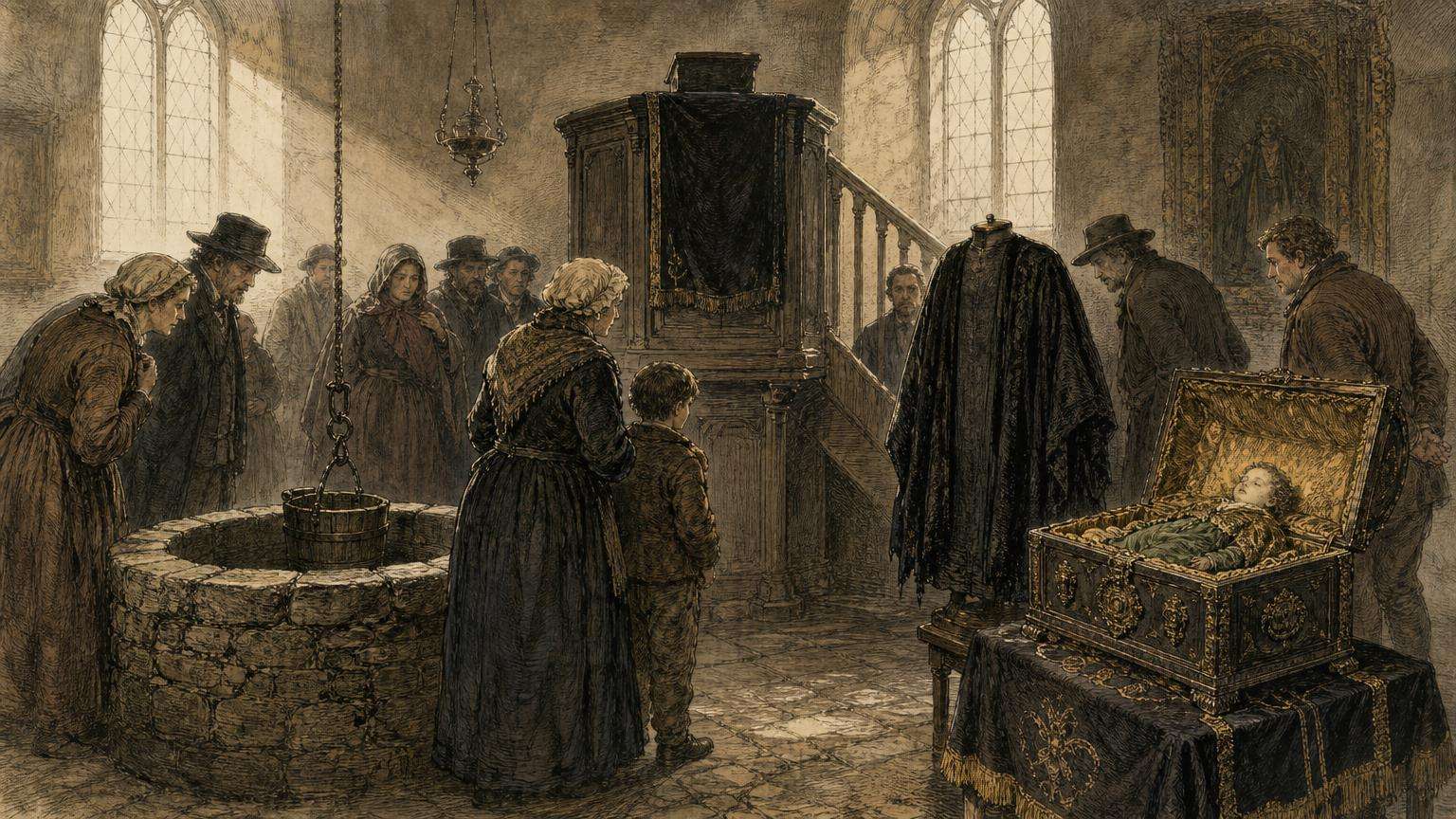
What Could Be Seen in the Bethlehem Chapel in 1648
Betlémská kaple
Content warning: execution, harm to a child
From the year 1648 there survives a description of this chapel, which is among the most fateful places of our history. The chapel was a broad, not very high vaulted building, in which, on the north side, a round well had been built some years before, lined with fine four-sided stones, four fathoms deep and holding sweet water. Hus's pulpit still stood there, not round but four-sided, of rough timber and hung about with cloth: on it, to the right, was depicted Master Jerome of Prague at the very moment of being bound to the stake and burned, and in the middle stood Master Jan Hus, beneath whom the hangman's men are busily feeding the fire — one throwing Hus's books into the flames, another his garment. Whoever wished to climb up to the pulpit had first to pass through a small door, to the right of which was a chapel where Master Jan's black velvet mass vestment was kept. In that same chapel there was also a chest three spans long, covered with green cloth embroidered in gold, and in it a small coffin with a child which, according to a belief preserved among the people, Herod had ordered to be murdered. When the coffin was opened, the child could be seen, hard as stone and likewise clothed in a green silk garment — and the stab wound, which was said to run from the little foot right to the heart, they pointed out deliberately.