Why the Starvation Pit Is Called the Jug
Daliborka
Content warning: execution
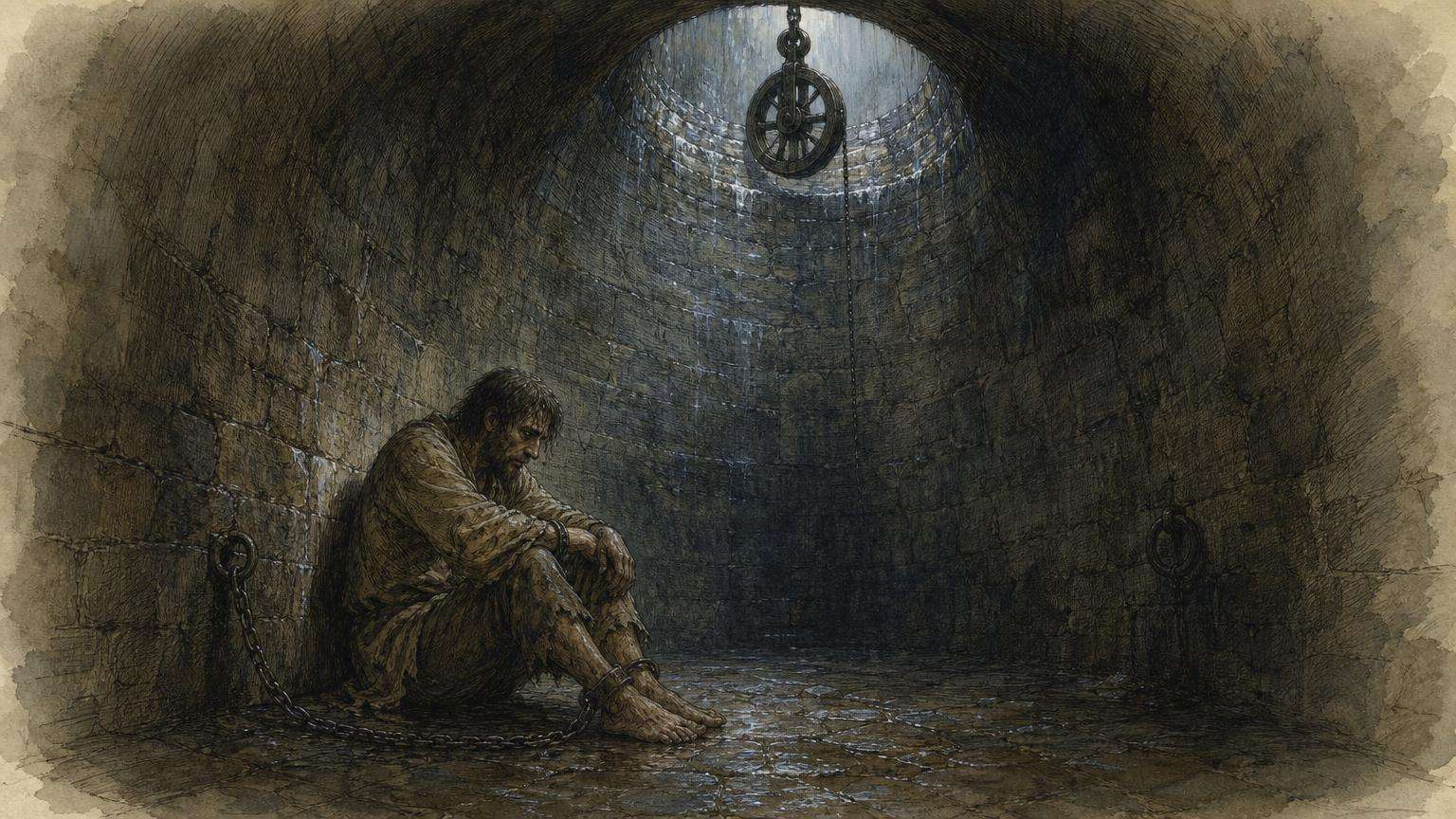
On the lower floor there is a chamber with niches like the one above, but much darker; Dalibor is said to have been imprisoned there. In one niche a piece of the masonry has been broken out — some prisoner is said to have attempted escape that way in vain. Elsewhere, behind the hearth, is a narrow recess where prisoners are said to have been suffocated with smoke. Most striking of all, however, is the opening in the middle of the paving, the opening into the jug. That name is said to have arisen because a man condemned to death was given, along with a small loaf of bread, a jug of water for the last time in that death-hole. Above the opening hangs a pulley on a ring in the ceiling, by which the condemned were lowered down. And below that vault there is an opening to be seen into the lowest vault of all, egg-shaped and some three metres high; the bodies of prisoners are said to have been thrown there — though the archaeologist František Beneš had himself lowered into it in 1872 and found no bones at all. It seems that prisoners were lowered into the starvation pit only for a time, so that they should be subdued and confess. But the tale relates that the mouth of the jug was always covered and sealed once the prisoner had been lowered, so that no one could let food down to the condemned man.