The Veil That Bought a Vein of Gold
Karolinum
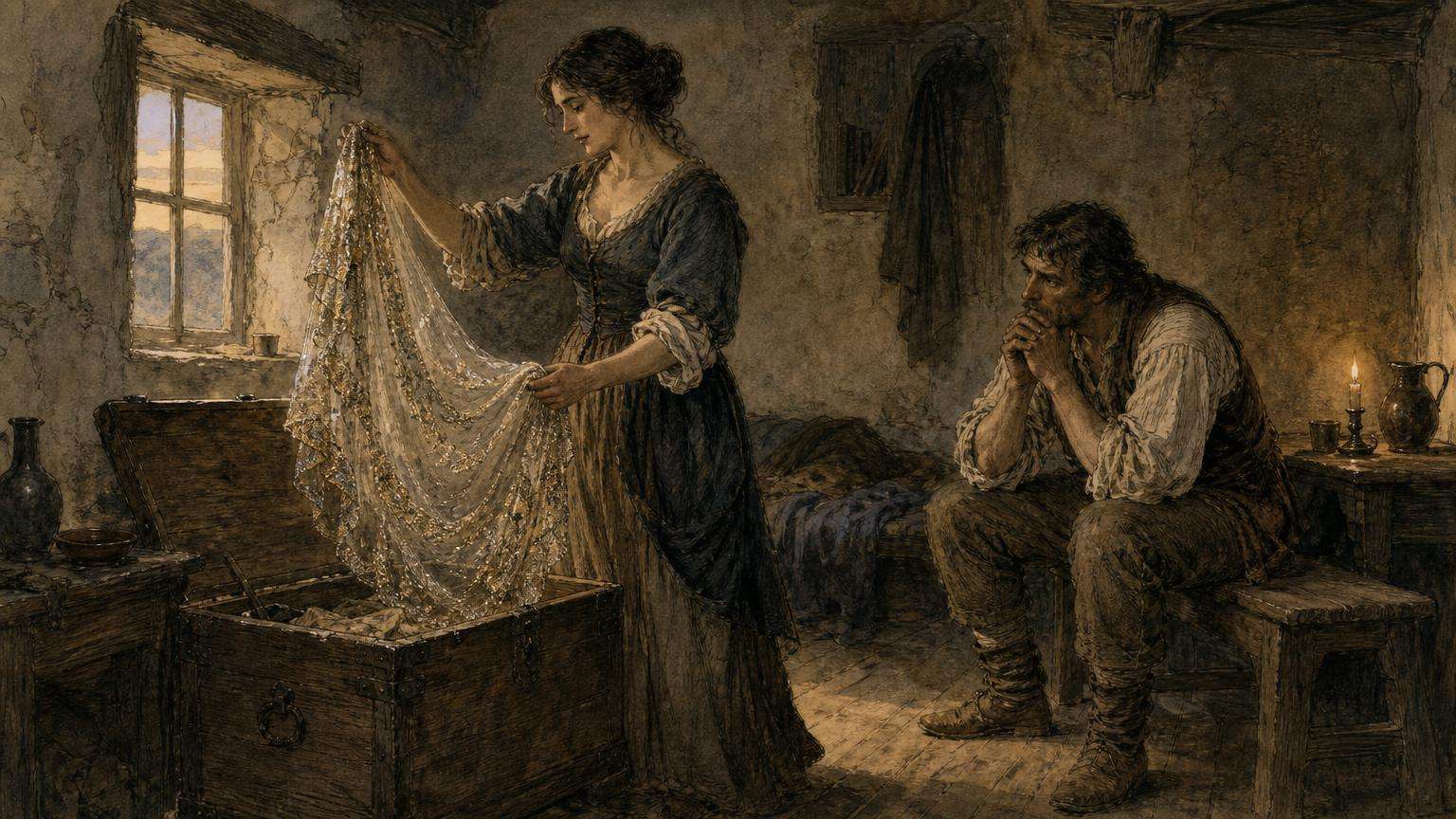
In the reign of the Emperor Charles IV there lived in Prague a wealthy burgher, Johlin Rotlev. He had houses, gardens and vineyards, but he took up mining and buried all his fortune in it, so that his creditors seized house after house and piece after piece. When things had come to such a pass that he was to move into lodgings, the spirit of enterprise urged him to try his luck once more at Jílové — only where to find the money for it his spirit could not tell him. Once, when he had long and vainly racked his brains over this, his wife came to him and, seeing him careworn and lost in thought, asked what he was thinking of. He did not conceal from her the grief of his heart, and his noble wife knew the remedy at once: she went to the chamber where her most magnificent veil was kept, the one precious thing she had preserved until then. And that sacrifice out of wifely love bore abundant fruit — Rotlev struck a vein of gold which brought him three hundred thousand Hungarian gulden. Once more he had earthly goods, fortified houses with their farms, villages, houses, gardens and vineyards, and out of his largest house there later came the Charles College; that house was afterwards always called the Veil. The truth is that a miner named Sloiger brought King Wenceslas a piece of gold weighing ten marks, and that Rotlev had his share in it. But when it was forgotten why that mine of Sloiger's, the Šlojíř, bore that name, people invented a legend to fit it, after the veil that was then in common wear.