The Veil That Would Not Burn
Klášter svatého Jiří
Content warning: violence
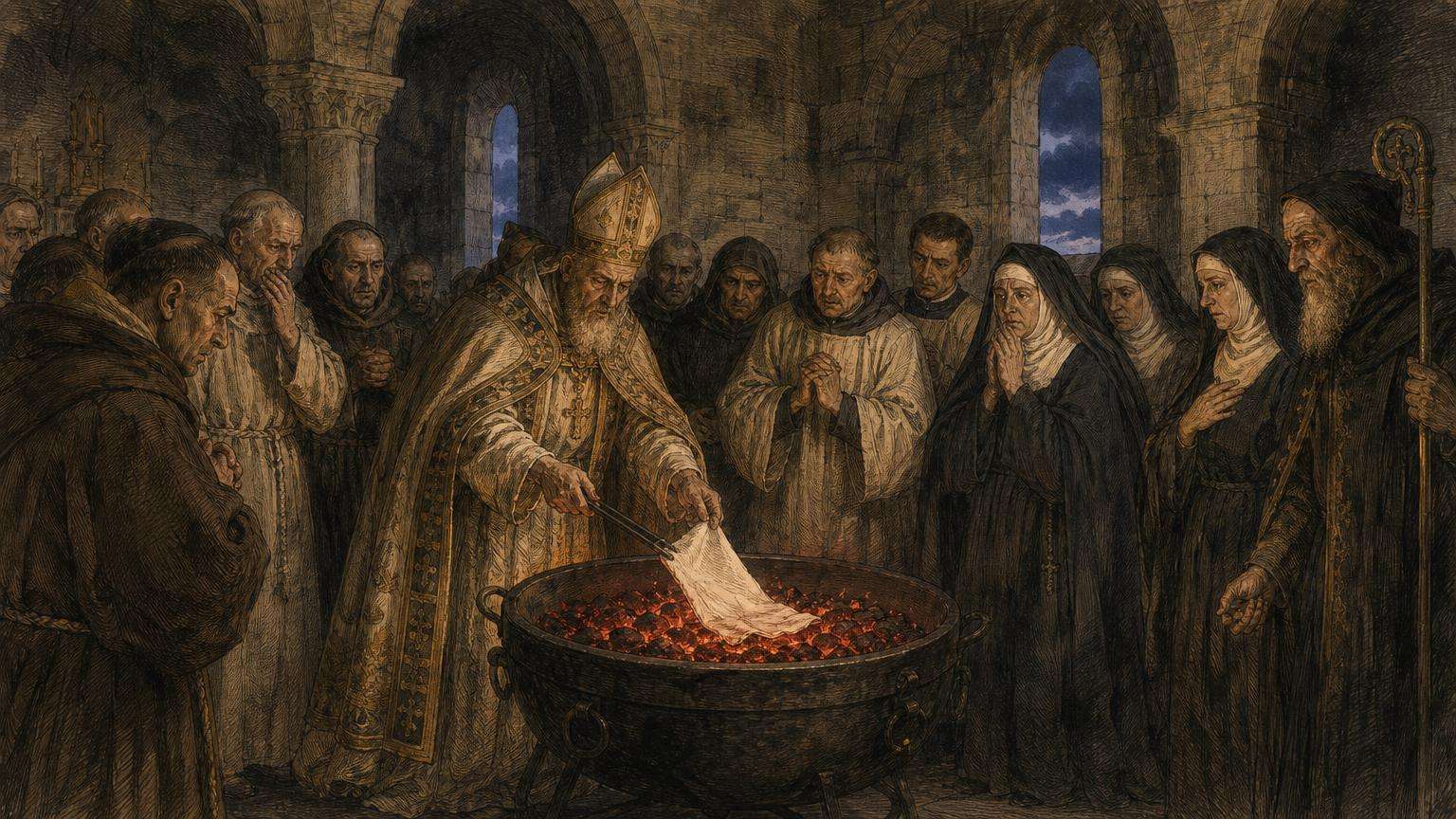
The chronicle relates that Drahomíra took counsel with two squires and sent them to Tetín to destroy her mother-in-law Ludmila. When those ruffians arrived, they gathered about them a crowd of villains like themselves; at evening they surrounded the court in arms, broke down the door, entered the house, seized Ludmila, cast a rope about her neck and strangled her with it. Thus she came to the end of her life on the Sabbath day at the first hour of the night, having lived sixty-one years. And God showed wonders and miracles through her at the place where she was buried — it was not in a church but beneath the castle wall. As late as 1100 the saint became famous through a miracle: in that year the church of Saint Peter within the precinct of the convent of Saint George was rebuilt, and Bishop Heřman consecrated it; the abbess of Saint George, Windelmutha, handed over to him according to custom the relics of saints to be laid in the altar. Then the bishop had a great cauldron full of glowing coals brought, invoked the Holy Trinity and cast into it a piece of Ludmila's veil. To the astonishment of all present — among them Cosmas, who relates it — the veil did not burn, although it grew red hot, and afterwards was as white and strong as if it had been woven that very day. Then the bishop and all the rest shed tears of joy and thanked Christ for the miracle shown to them. In a niche in the right-hand wall there is also a sandstone block with a red streak; that streak is said to come from the blood of Saint Ludmila, and for that reason the stone was brought here from Tetín.