The Bearded Man and the Sign of High Water
Křižovnické náměstí
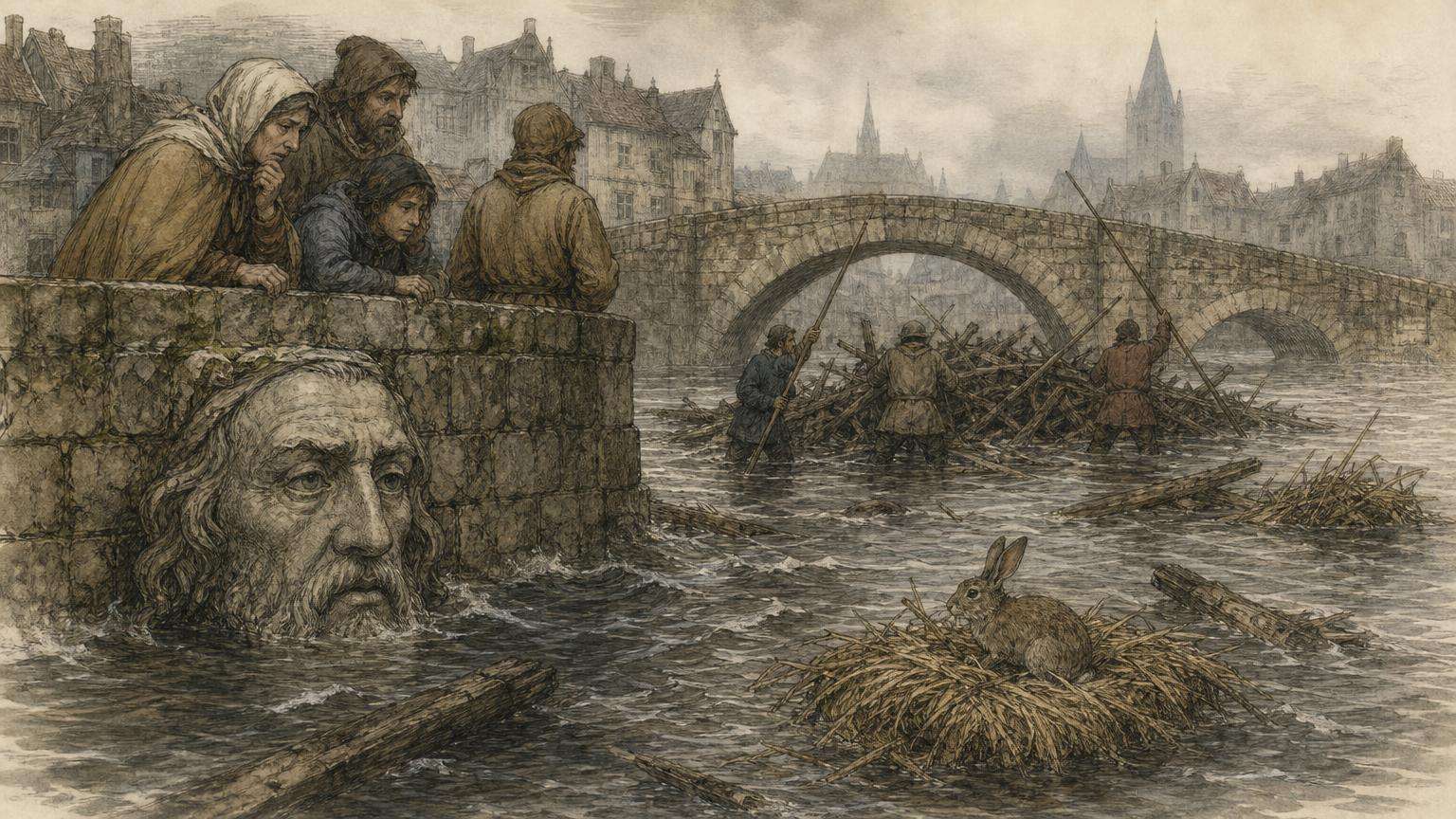
In the embankment wall by Knights of the Cross Square, right by the first arch on the right, a stone head of a bearded man is set. It is called Bradáč, the Bearded One, and according to Professor Velíšek it represents Jílek, the builder of the bridge, who thus made himself immortal. By that head people have always judged how high the water had risen: as soon as it touches the lower part of the beard, the Vltava leaves its banks and it is high time for people to move out of the riverside houses; when the water reaches Bradáč's mouth, it is already spreading into the streets of the Old Town; and when at last it covers his bald crown as well, people may be ferried by boat even across the Old Town Square. The earliest mention of Bradáč is from 1482, and the chronicles speak of him at every flood. Hájek writes under the year 1501 that on the feast of the Assumption of Our Lady such high water came to Prague that the head called Bradáč was two ells beneath the surface. Much timber and various things floated by with the water, sheaves of corn, stacks of hay and aftermath, and on one sheaf of oats sat a live hare; mill wheels, cottages and roofs floated by as well. Above the bridge all that timber, hay and corn came to a standstill, and the people of Prague therefore ordered all the Jews to walk about on that timber and push it slowly through. Likewise in 1565 the water reached Bradáč's eyes and, in the streets, as far as where the Russian church now stands; and so too in 1569 and 1582.