The Loreta Bells
Loretánské náměstí
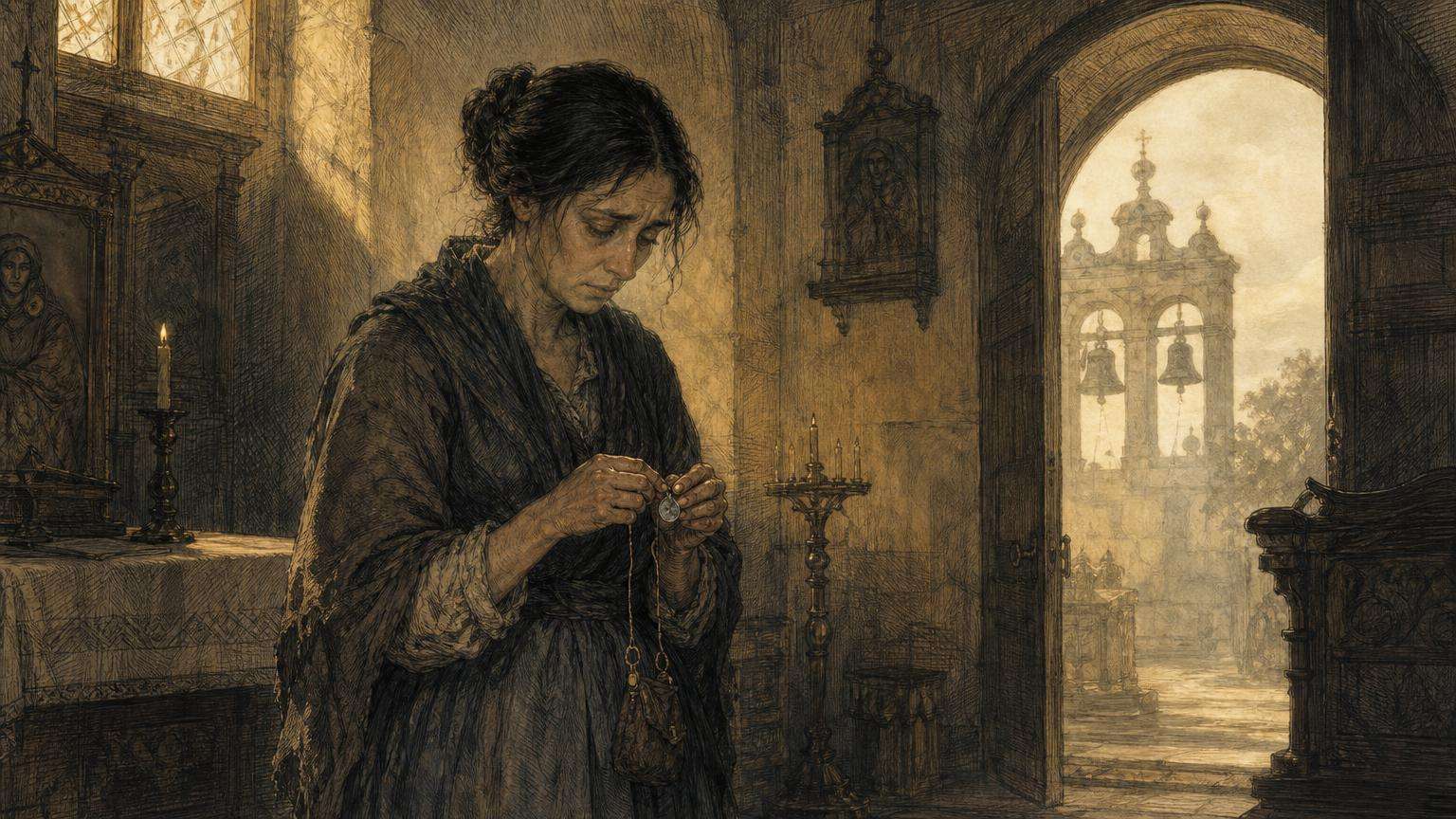
It is several hundred years now since a poor widow lived in the New World quarter. What good was it that she was hard-working and thrifty, when she had so many children? Everyone knows that the towers of Loreta have many bells — and the widow had exactly as many children, and so she called her little ones the Loreta bells. In those days the bells in the tower did not yet play tunes; they only struck the hours: the larger ones the full hours, the smaller ones each quarter. The widow used to say that it was just the same with her bells at home — the bigger ones could wait, but the little ones wanted something every moment. The poor widow's only treasure was a string of silver coins, exactly as many as she had children; she had got them from a wealthy godmother and had put them aside for the children, one apiece as a keepsake. Then a contagious sickness came to Prague. It raged worst among the poor, who in their despair insisted that the rich had contrived it with poison to wipe them out. At last the infection reached the widow's family too, and the eldest boy fell ill. The mother was near despair, for she loved all her children alike and never thought that with a child she would also lose a share of her cares and toil. She could not pay a doctor, and she knew besides that they were all far too busy for any of them to come to her. Not two hours passed before the child was making ready for the journey to the next world. The unhappy mother saw that there was no help, took out the string of silver coins, slipped the largest from it and went with it to Loreta. Before long the largest of the Loreta bells rang out and the child went out like a candle — it was his passing bell. In those days the death carts drove all day about Prague, taking up the dead from every house, and when they were full they carried them to the pits in the cemetery. The day after her child's death the poor widow walked behind one of those carts, so that she might at least know in which pit her child would lie. When she came home she found her second child, a lovely fair-haired little girl, already flushed with fever like a rose. Barely two hours later the mother was walking to Loreta again with the second coin. So it went day after day: coin was slipped off after coin, and at Loreta ever smaller bells rang out. The mother was numb with despair; she walked mutely behind the death cart and came quietly back from the cemetery to tend the next child dying. She was roused from that numbness only by the death of the last and youngest child, scarcely more than an infant; when the smallest Loreta bell rang she thought her heart would break. She saw the last child out too, and when she returned she felt that the sickness had taken hold of her as well. She lay down, with no one even to hand her water. Her only comfort was that she would not outlive her children by long. An unspeakable heat burned through her whole body, and at last she felt a strange faintness spreading through her limbs, dying away limb by limb. “Ah, my dear children,” she sighed, “I served you, but no one will serve me; I had the passing bell rung for you, and who will ring it for me?” Scarcely had she spoken when all the Loreta bells rang out, and their sounds, growing ever stronger, flowed together into songs so beautiful and so moving that it seemed the angels themselves were singing there.