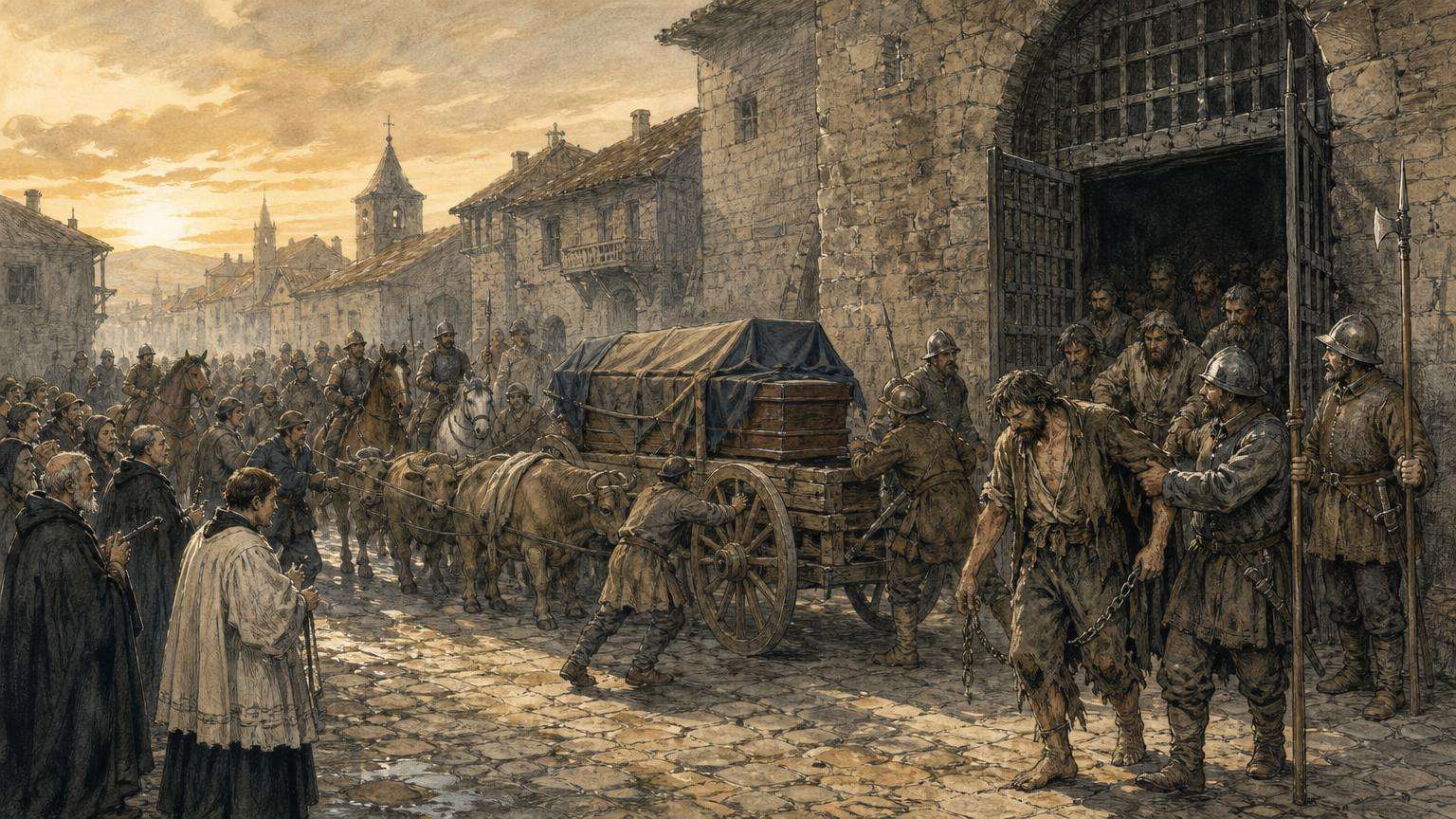
Saint Wenceslas's Body and the Release of the Prisoners
Malostranské náměstí
When in 929 they were carrying the body of Saint Wenceslas from Boleslav up to the castle and came to a gaol in the Lesser Town of Prague, where many prisoners were shut up, the oxen halted and could not move the cart with that body. And the sun was already rising. They harnessed many oxen and horses, and it availed nothing. A great many people ran to the spectacle and asked what so heavy a thing they were carrying; the servants answered: 'We are bringing secret goods of our lord Prince Boleslav up to this castle.' When they had stood there a long time labouring thus, some of the people of Prague said: 'There is something strange here.' They stepped up to the cart, lifted the covering, opened the chest, and when they saw the holy body they recognised their prince Wenceslas and cried out with a loud voice, praising God. The chief priest and administrator of the church of Saint Vitus heard it, came with his clergy and said to the people: 'You know well that this holy prince, while his holy soul dwelt in this body, gladly performed works of mercy, especially to those in distress and in prison; therefore order the prisoners to be released from this gaol, the guilty and the innocent alike, for this holy prince wishes to show them mercy even after his death.' When they had done so, they at once brought that holy body all the way to the church of Saint Vitus with a mere two oxen. It was also told that at that time the fetters fell from one innocent prisoner, and part of them are shown at Karlštejn to this day. In memory of that miracle the people of the Lesser Town always released one prisoner on that day. Ruth himself, however, remarks that the tale is idle: at that time there was neither a Lesser Town nor a town hall.